In practice
You don't get answers like this from a survey
What thousands of students said when we asked real questions.
By Chris McNutt··2 min read

We asked thousands of students real questions this spring. Here's the kind of thing we heard back.
Students stood up in front of a room of educators, said which teaching they wanted more of, and helped plan next year. Then, we asked everyone to share more about what they wanted and what changes were being made, and they weighed in again.
How do you get past a row of numbers and into that kind of conversation? You ask your community real questions, you keep asking, and you close the feedback loop. This is what Polaris Education makes possible.
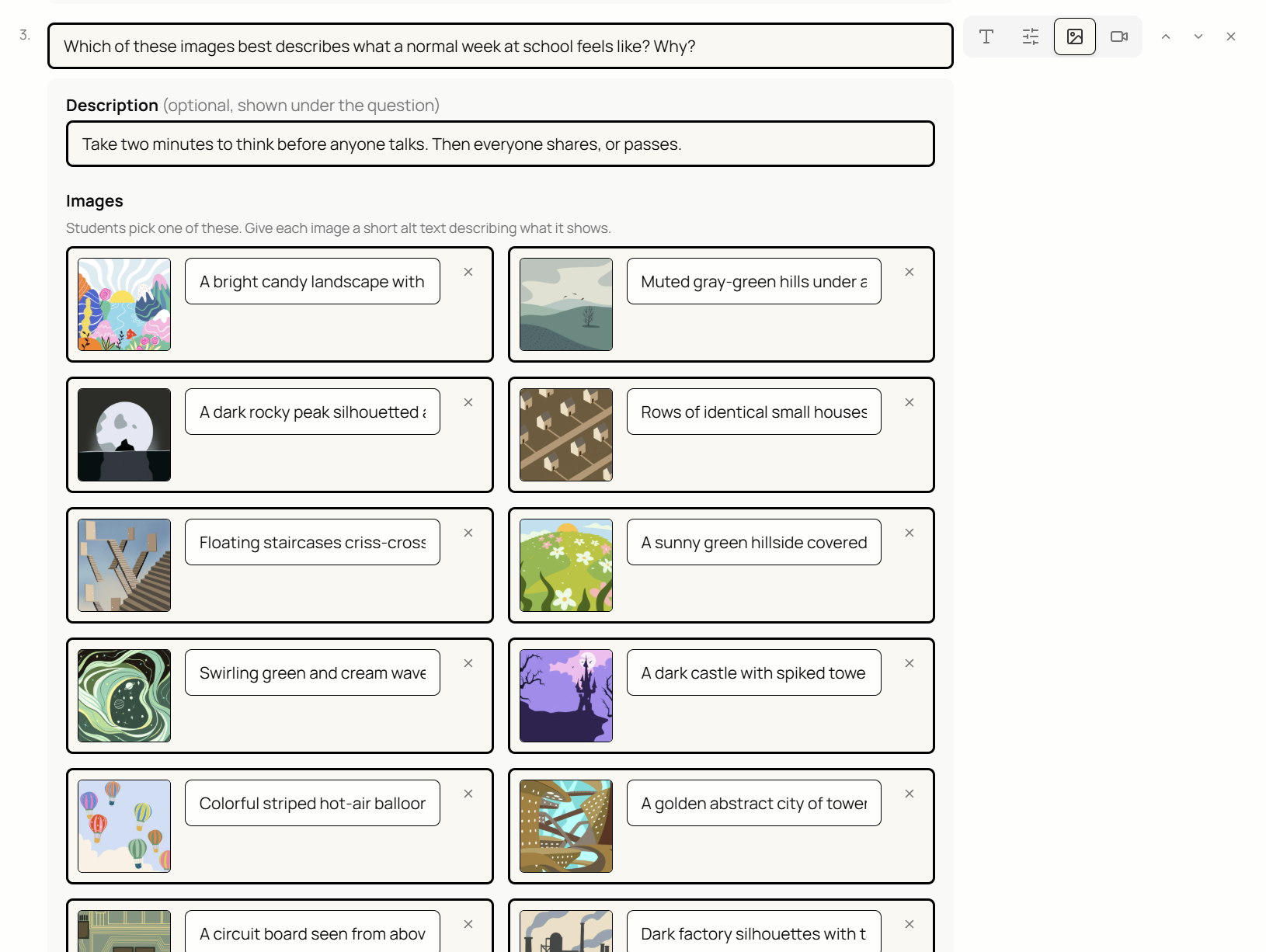 Ask about almost anything. If it matters to your school, organization, or college, you can put the question to the people who live it.
Belonging, motivation, discipline, whether a new schedule is working. You pick what you want to understand, and Polaris Education asks students in a way they trust, then turns what they say into something you can act on.
A few more things the pilot turned into real change:
- Engagement. A school watching engagement slip, unsure what to do next, read its motivation and culture data and moved toward hands-on learning, bringing teachers along.
- Discipline. A district reread its discipline data after talking with students and began reframing policy around restorative justice.
- Inclusion. A team that needed a clearer picture of IEP and 504 inclusion interviewed the whole community and started shifting toward Universal Design for Learning.
Coming soon: a community dashboard
Share what students said back to families and the wider community, in plain language.
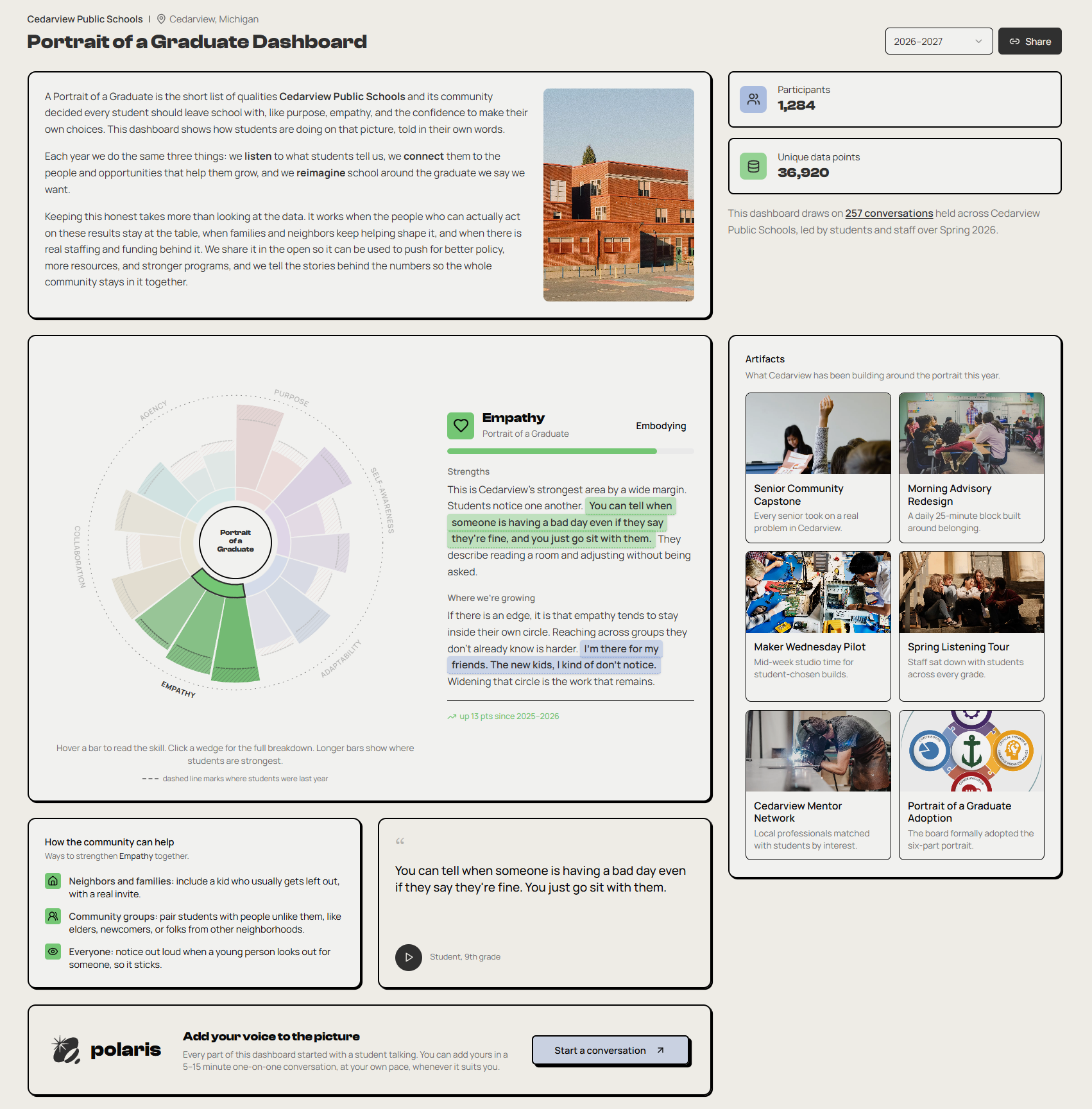 The dashboard is how a school shares what it heard with families and the wider community, in plain language.
You don't get answers like that from a typical 1-to-5 survey. You get them when you ask a real question in a way a student trusts. That's what Polaris does.
All the data shown above is hypothetical, used for illustration. None of it is real student responses.
Want to hear from your students?
Polaris is opening to new districts for the coming year. We will walk you through a real report and what a season of listening could look like in your schools.
Read next

We listened...now what do we do?
How educators and student leaders can make sense of hundreds of conversations and turn what they heard into action.

By the time the data comes back, they've moved on
Lagging indicators, feedback loops, and what we're actually building toward when listening becomes an ongoing dialogue instead of an annual event.

Skeptical about AI in schools? So are we.
How we think about student data, guardrails, and the edtech AI rush, and where a person checks what the machine produces.