Impact
We listened...now what do we do?
How educators and student leaders can make sense of hundreds of conversations and turn what they heard into action.
By Chris McNutt··2 min read

How do you take hundreds of conversations and decide what to do next? In addition to our extensive reporting features, we're rolling out our Impact experience in Polaris Education.
It gives educators and student leaders a space to process and make sense of all the data they've collected.
Sensemaking: find the patterns together
Sensemaking is a shared workspace to analyze all the quotes from your session. Participants draw from a shared deck of quotes, organize them, add labels, and draw or write on the board, making sense of their findings.
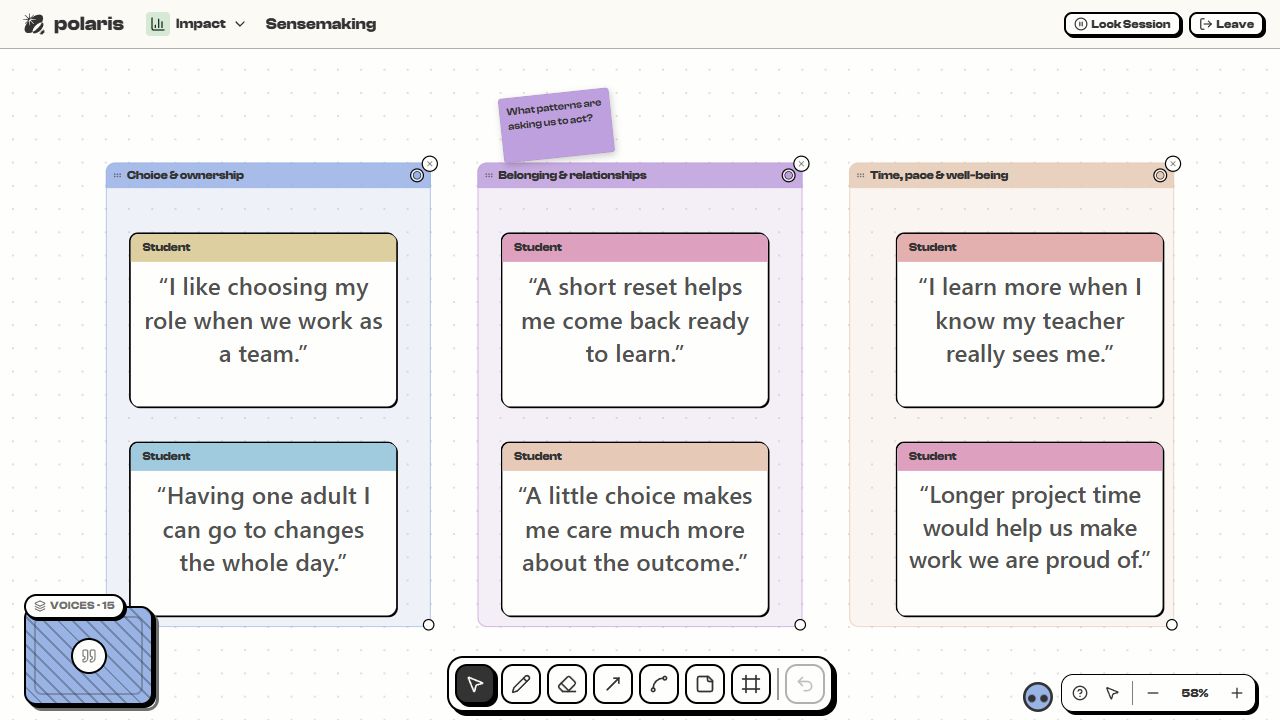 A Sensemaking board in progress, using fictional data.
Affinity: see before you agree
Each person sorts a small group of quotes into two or more categories. Then, the board opens and compares what each person noticed, wondered, or found, allowing for discussion over the findings.
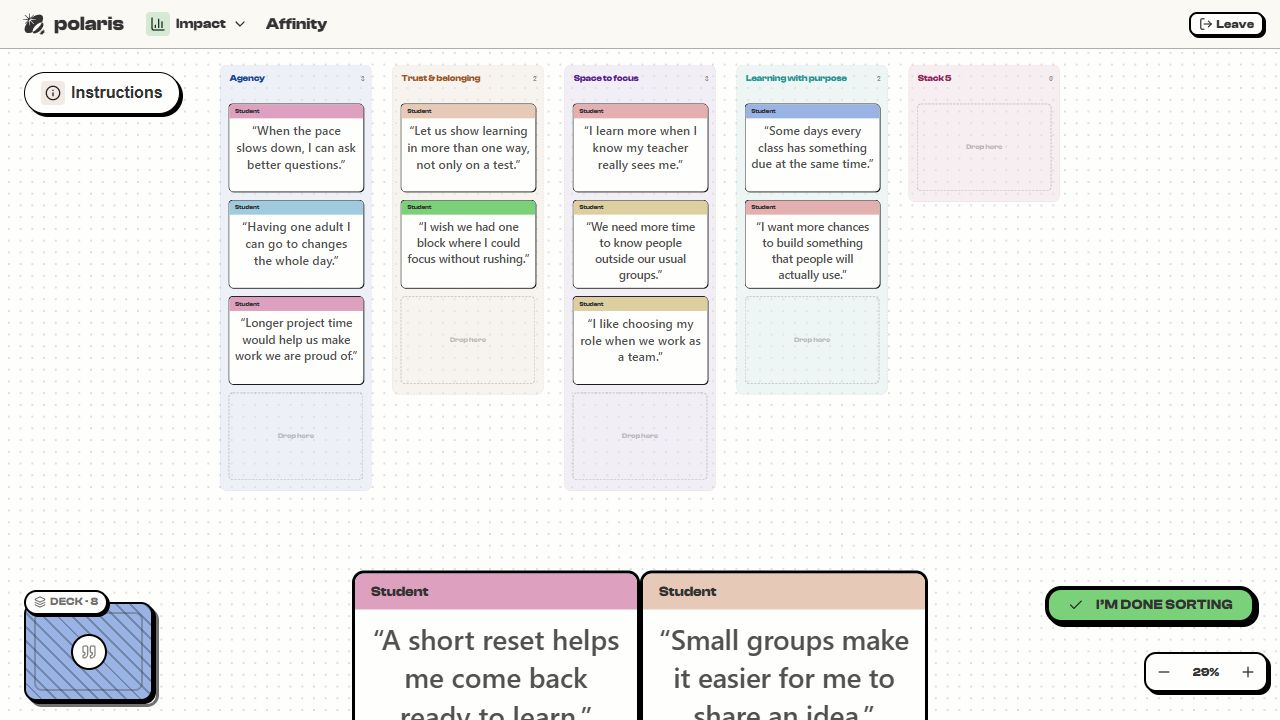 Each person sorts alone before the boards open. Fictional data.
Where Should We Start?: choose a first move
Where Should We Start? helps a group turn patterns into a first step. Participants propose actions, connect them to supporting quotes, and vote on where to begin.
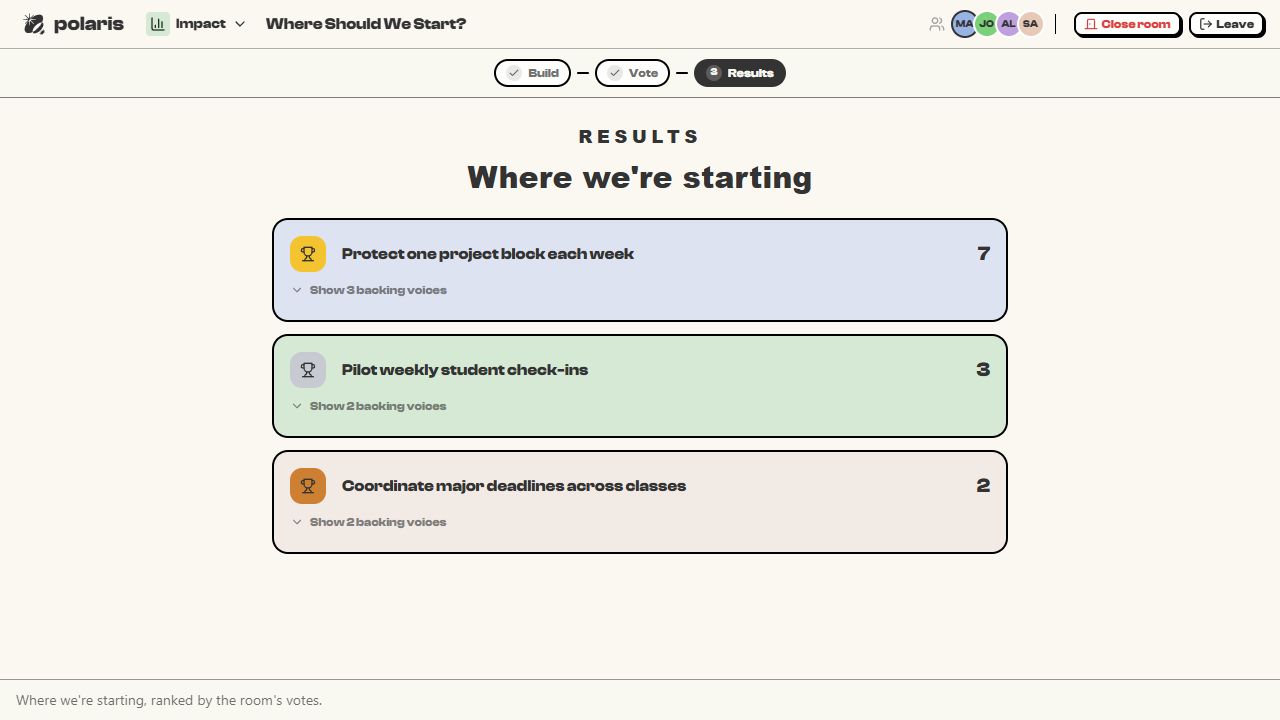 The room leaves with a ranked place to start. Fictional data.
Students can lead this work
We're excited to say that facilitator tools are now built into Polaris. Schools can designate student leaders to lead sessions with additional hosting tools and participate in Impact activities. Staff can use the same tools to co-analyze their findings and take action.
Impact tools will roll out in Polaris Education over the next 1–2 weeks.
These screenshots use fictional student data. No participant records were used.
Want to hear from your students?
Polaris is opening to new districts for the coming year. We will walk you through a real report and what a season of listening could look like in your schools.
Read next

By the time the data comes back, they've moved on
Lagging indicators, feedback loops, and what we're actually building toward when listening becomes an ongoing dialogue instead of an annual event.

Skeptical about AI in schools? So are we.
How we think about student data, guardrails, and the edtech AI rush, and where a person checks what the machine produces.

You don't get answers like this from a survey
What thousands of students said when we asked real questions.