Listening
By the time the data comes back, they've moved on
Lagging indicators, feedback loops, and what we're actually building toward when listening becomes an ongoing dialogue instead of an annual event.
By Chris McNutt··2 min read

Schools have access to more student data than ever before, yet the data they have is often untimely, confusing, and doesn't translate into sustainable systemic change. The answers come back too late to act on, and the students who gave them rarely hear what happened.
Polaris Education solves this problem through meaningful listening and analysis at scale.
The way we collect data needs to change
- Data use is an interpretive act. What educators already believe shapes what they take away from a given dataset. (Coburn & Turner, 2011)
- Survey fatigue is measurable. Running several surveys in one academic year significantly suppresses response rates on the later ones. (Porter et al., 2004)
- A single interview takes several hours to transcribe and produces 20 to 40 pages of text, and that's before the analysis begins. (Pope et al., 2000)
- One teacher who genuinely listens is associated with greater student agency, better math grades, higher GPA, and lower absence, across 1,751 students in one district. (Conner et al., 2025)
A feedback loop needs to be closed
The second conversation is where we really hit our stride. Polaris lets you quickly ask follow-up questions, check in on new programming or changes, and make sense of those follow-up conversations. Conversations can build programs together, rather than slowly piecing together ideas from opaque datasets.
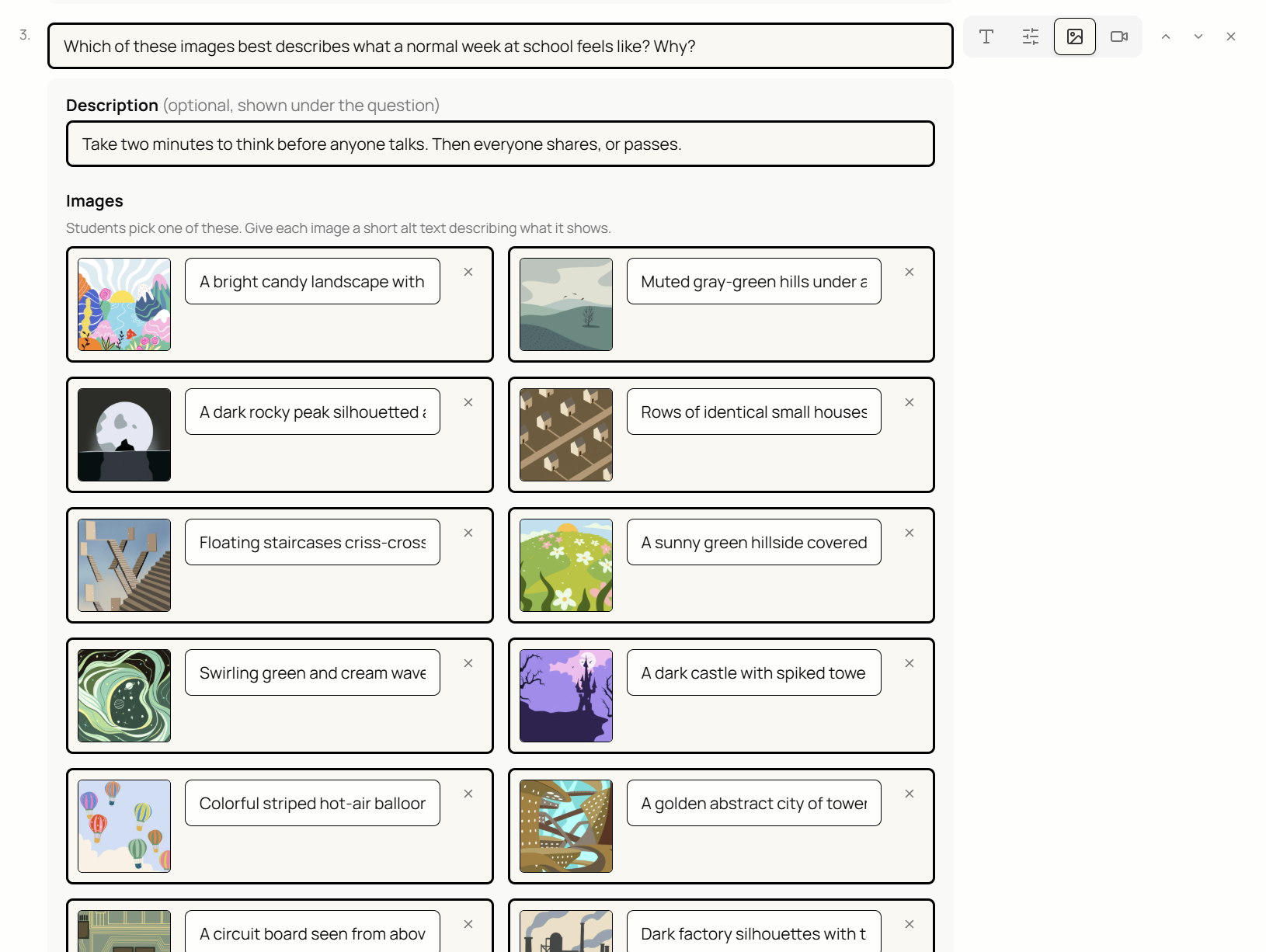 Reuse a question from an earlier session to watch how the answers move.
Listening often enough becomes system change
One focus group tells you about seven students. Fifty sessions begin to give you a representative sample. Polaris lets you talk to all students and their community without much trouble, and we can make sense of 20,000+ people in a single session, which is what makes this work across a school, a district, or a whole community.
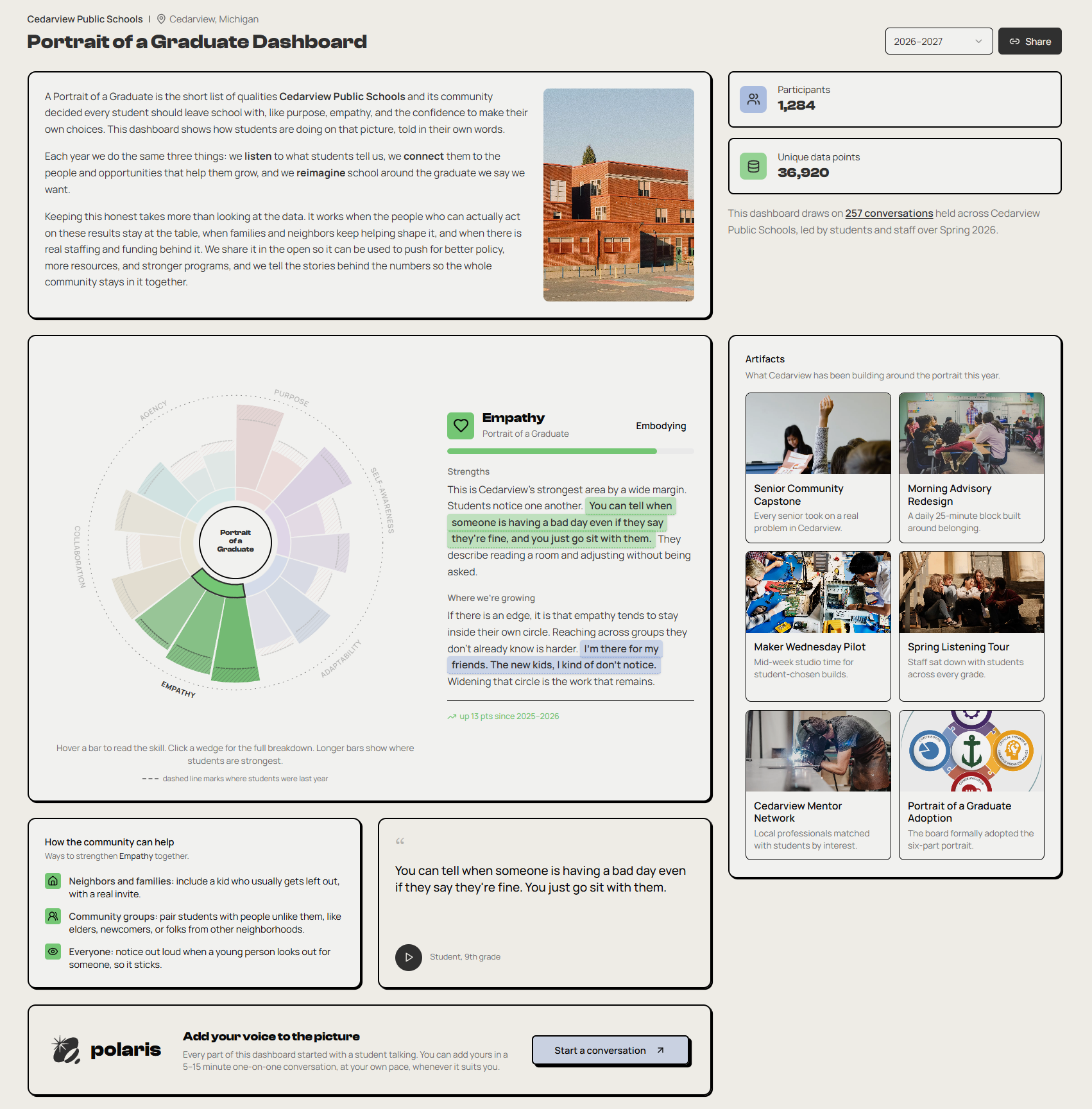 Closing the loop: sharing what you heard back with families and the wider community.
What we're building, and what we're not
Polaris is not a chatbot and not an AI tutor, and we have no interest in automating human connection; it's a way to sample the water and reflect on what you find. What we want to build next is more ways to gather this at scale and a shorter path between what a community says and what its school actually does, so listening becomes an ongoing dialogue rather than an annual event.
The report screens shown above use sample data for illustration, not real student responses.
Want to hear from your students?
Polaris is opening to new districts for the coming year. We will walk you through a real report and what a season of listening could look like in your schools.
Read next

We listened...now what do we do?
How educators and student leaders can make sense of hundreds of conversations and turn what they heard into action.

Skeptical about AI in schools? So are we.
How we think about student data, guardrails, and the edtech AI rush, and where a person checks what the machine produces.

You don't get answers like this from a survey
What thousands of students said when we asked real questions.