Listening
Polaris Education is opening to new districts
This spring, 4,000 students across 11 districts told us what their schools get right and wrong, in their own words. Polaris is opening to new districts for the coming year.
By Chris McNutt··4 min read

Make every student a catalyst for change.
Think about the last time someone really listened to you: didn't just nod and wait for their turn, but sat with what you said. You can feel it when it happens. Something settles, and you say the true thing instead of the easy one.
Students feel that difference too. Most of the school day they get talked at and moved along to the next thing. Ask a young person a real question, and actually listen to the answer, and you hear things a dashboard never shows you: why a kid who loves science has quietly checked out, or what it would take for another to feel like they belong.
Human Restoration Project, a nonprofit run by public-school educators, has worked this way for years: we listen to students, learn from what they say, and rebuild school around it. It's slow, human work.
Polaris Education is how we do that listening across a whole district at once. This spring, we piloted with 4,000 students across 11 districts. Here's what we built.
Results from the pilot
students heard
districts
quotes & key data points
See everything Polaris does
Designing a Day of Listening, grouping what students say into themes, linking every finding back to real audio, and asking your data plain-English questions: it's all in one place. Take the full tour of how listening turns into something you can act on.
How Polaris Works
You write the questions, students talk, and Polaris turns what they say into something you can act on.
Some questions our pilot districts asked this Spring were:
- "What's one action our school could take, no matter how large or small, to help support your learning?"
- "Have you experienced your ideal day at school? What did that look like?"
- "What should teachers know when it comes to student mental health?"
1. Create a Day of Listening. Write clear, fair questions about whatever you actually want to understand, then schedule the listening sessions.
2. Students share their voices. Students respond however they're most comfortable: out loud, in a group, or in writing, and in their own language. Sessions run 30 to 60 minutes.
3. Polaris reveals what matters. Polaris strips out identifying details, groups what students said into themes, and builds a report you can question directly. Every finding links back to the real audio.
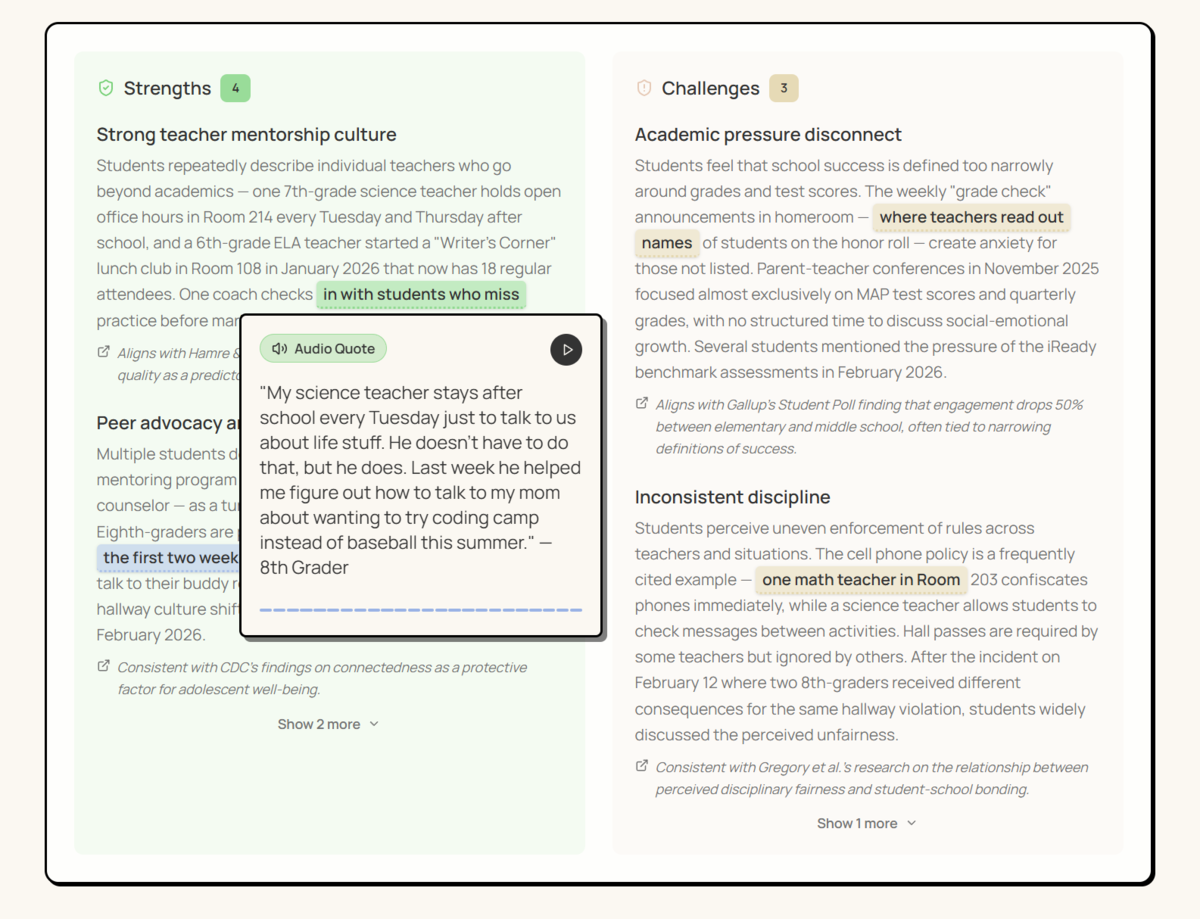 Polaris reads through conversations and finds strengths and challenges, each tied to the audio behind it.
What a leader actually gets
Your community talks, Polaris listens. Students (and/or adults) answer out loud, in a group, or in writing, whichever feels natural. No checkboxes, no forced rankings.
Themes emerge across voices. Polaris finds the patterns across hundreds of conversations. Every finding links back to specific student audio, so you hear the evidence yourself.
Ask your data anything. Ask something like "What did students say about our math program?" and get a plain-English answer, pulled straight from the conversations.
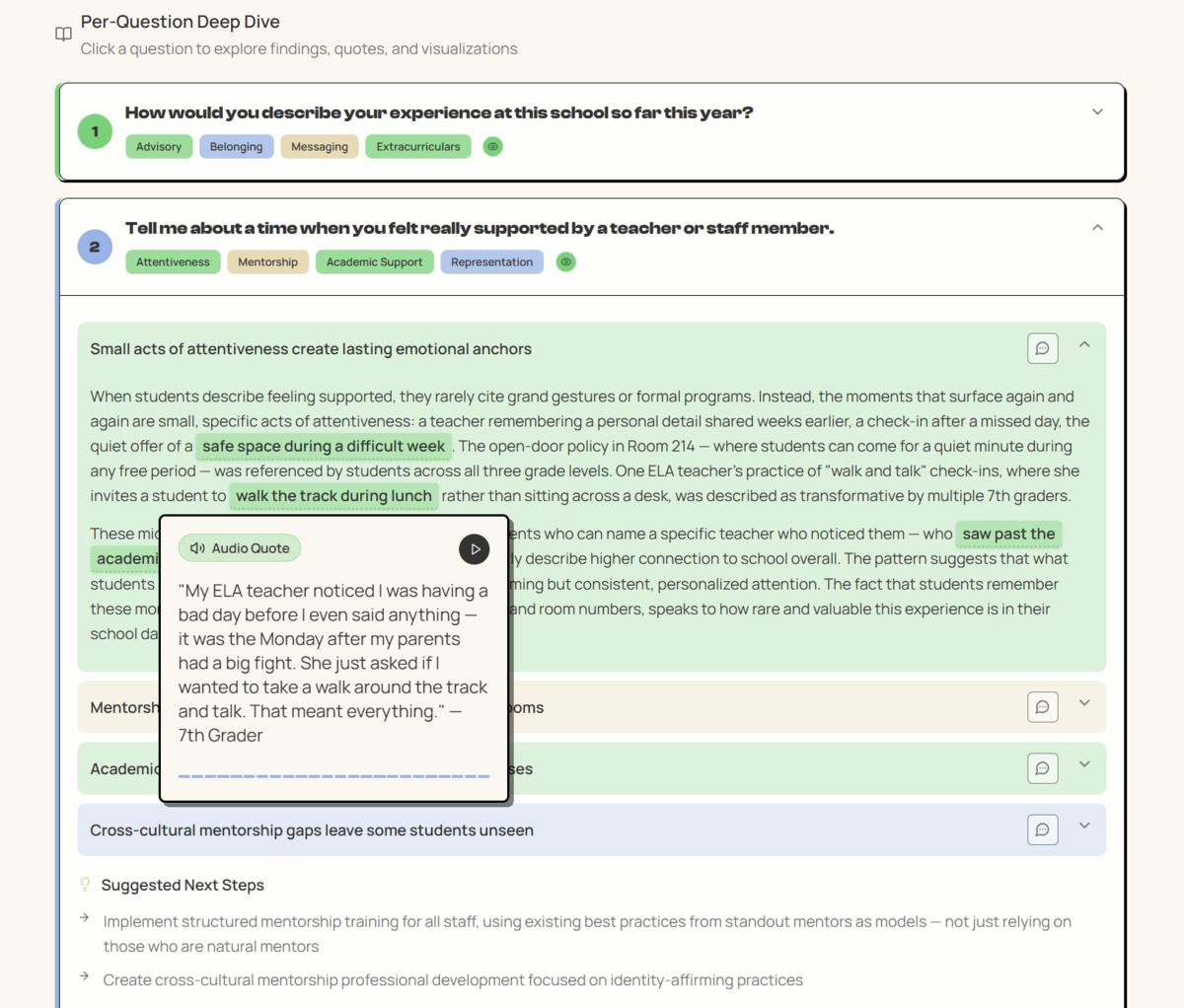 Open any question and jump straight to the audio behind a quote.
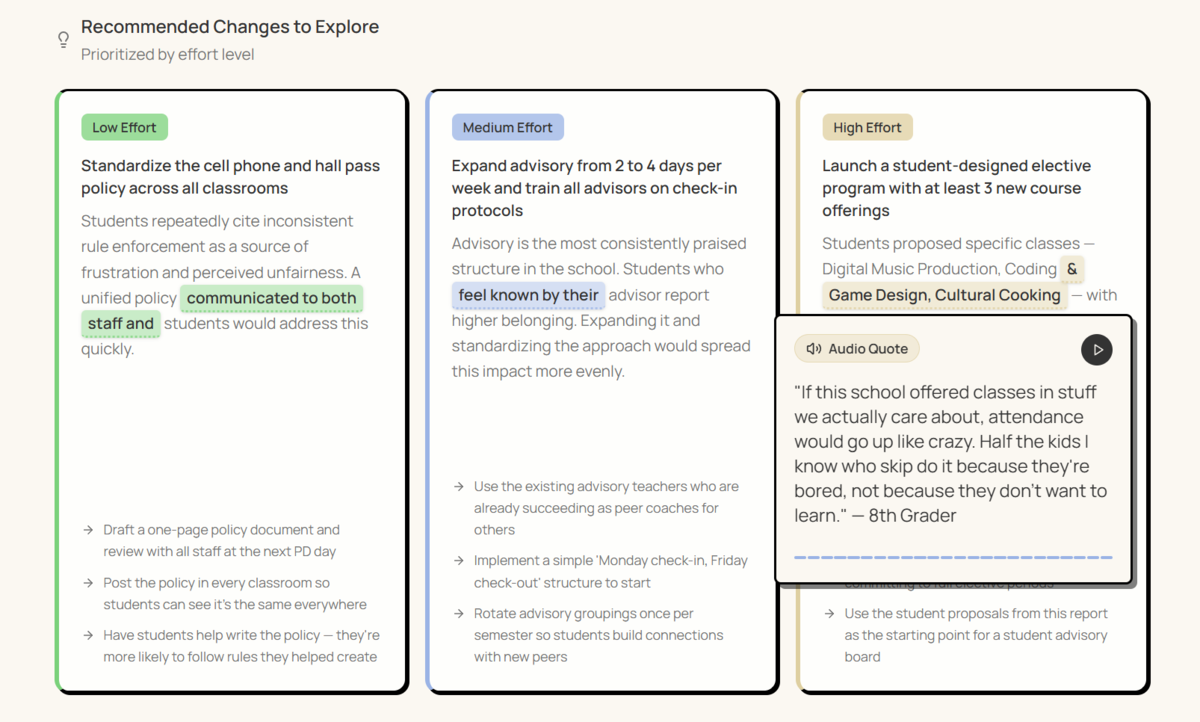 And concrete next steps, sorted by effort and grounded in what students said.
Privacy, by design
Polaris is run by Human Restoration Project and we're chartered to never sell student data. It's built to FERPA, COPPA, and CIPA standards.
95% Common Sense Privacy
Conversations like these are so powerful. Honestly, students at every school should get to do this.
Find your North Star.
Polaris is opening to new districts for the coming year. If you lead a school or district and want to hear from your students, not just the loudest few, let's talk. We'll show you a real report and walk through what a season of listening could look like in your schools, and what tends to shift once students realize someone was actually listening.
All report screens shown above use sample data for illustration, not real student responses.
Want to hear from your students?
Polaris is opening to new districts for the coming year. We will walk you through a real report and what a season of listening could look like in your schools.
Read next

We listened...now what do we do?
How educators and student leaders can make sense of hundreds of conversations and turn what they heard into action.

By the time the data comes back, they've moved on
Lagging indicators, feedback loops, and what we're actually building toward when listening becomes an ongoing dialogue instead of an annual event.

Skeptical about AI in schools? So are we.
How we think about student data, guardrails, and the edtech AI rush, and where a person checks what the machine produces.